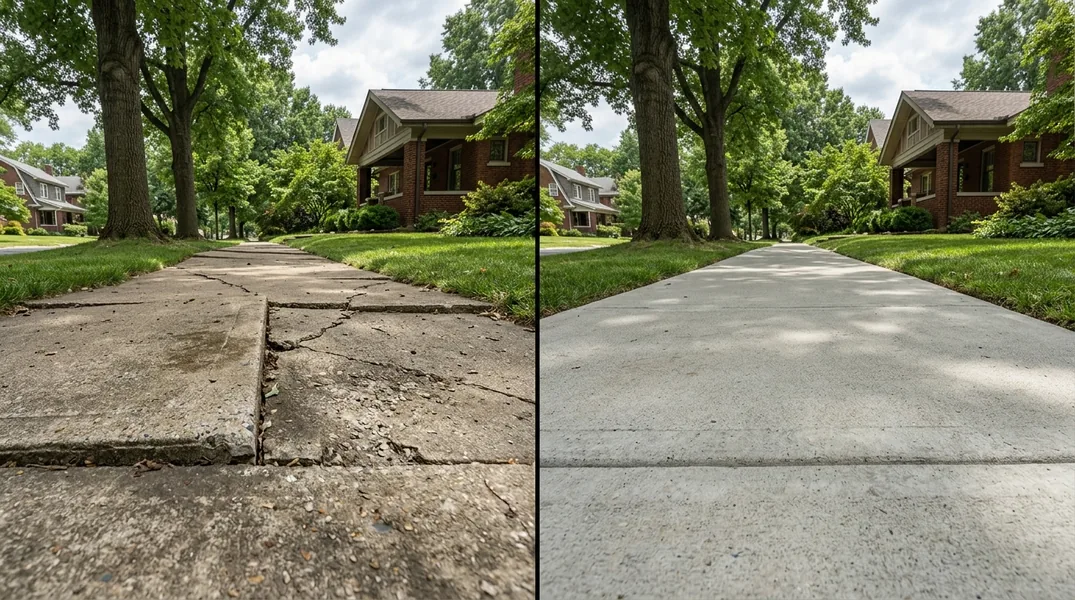
Why Louisville's Climate Is Tough on Concrete
Louisville sits in a region with one of the most demanding climates for concrete durability in the United States. The problem isn't just one factor, but a combination of environmental stressors that work together to accelerate concrete cracking and deterioration. Homeowners throughout the area frequently call us asking why their driveways, patios, and foundations develop cracks just a few years after installation. The answer lies in understanding how freeze-thaw cycles and clay soil composition interact to put constant pressure on concrete surfaces.
The Kentucky climate experiences dramatic temperature swings, especially during fall and winter months. Temperatures can drop below freezing at night and then climb above 40 degrees Fahrenheit during the day, sometimes within the same 24-hour period. This constant cycling creates internal stress within concrete that, over time, leads to visible cracking and structural damage. When combined with the region's naturally occurring clay soil, these weather patterns become even more destructive. Understanding these forces is the first step toward protecting your investment in concrete improvements.
Understanding Clay Soil Heave and Its Impact
Clay soil heave is one of the primary culprits behind concrete cracking in Louisville and surrounding areas. Clay soil has a unique property: it expands significantly when it absorbs moisture and contracts when it dries out. This expansion and contraction cycle creates upward pressure on concrete slabs, literally pushing them from below. A driveway or patio that appears level one season may have noticeable heaving or settling the next, creating an uneven surface that's both unsightly and potentially dangerous for walking or driving.
The clay-heavy soil composition throughout the Louisville region means that this heave-and-settle cycle is more pronounced than in areas with sandy or rocky soil bases. When spring rains and winter snowmelt saturate the ground, clay soil swells beneath your concrete, exerting tremendous force upward. As the soil dries during summer months, it shrinks back down, leaving gaps and causing uneven settling. This continuous movement prevents concrete from remaining stable, and the repeated stress inevitably leads to cracking. Property owners who notice their concrete has become uneven or has developed a noticeable hump in the middle are almost always dealing with clay soil heave.
Freeze-Thaw Cycles: The Hidden Destroyer
Freeze-thaw damage is perhaps the most destructive force acting on concrete in Kentucky. When water enters the porous structure of concrete (and all concrete is porous to some degree), it can become trapped in tiny air pockets and microscopic cracks. When temperatures drop below freezing, that water expands as it turns to ice, exerting pressure from within the concrete itself. This internal pressure is powerful enough to break apart the concrete matrix, causing spalling (surface flaking), cracking, and eventual structural failure. A single winter season with multiple freeze-thaw cycles can cause damage that takes years to develop in milder climates.
The problem is compounded in Louisville because the region experiences so many of these cycles each year. Unlike areas that stay consistently cold or consistently mild, Kentucky's unpredictable weather means concrete endures dozens of freeze-thaw events annually. Each cycle weakens the concrete slightly, opening new pathways for water infiltration. Over three to five years, this accumulated damage becomes visually obvious. Homeowners often notice scaling (the loss of the concrete surface layer), pitting, and widespread cracking that follows no particular pattern. This is the telltale signature of freeze-thaw damage.
Concrete Cracking Louisville: Common Patterns and What They Mean
Not all concrete cracks are created equal, and understanding what different crack patterns indicate can help you determine whether you're dealing with normal settling, freeze-thaw damage, or clay soil heave. Linear cracks that run in straight lines across your driveway often indicate structural stress from below, frequently caused by clay soil movement. Spiderweb or map-cracking patterns, where multiple small cracks branch out in different directions, are typically the result of freeze-thaw cycles weakening the concrete surface. Edge cracking, which appears along the perimeter of a concrete slab, often signals that the concrete is pulling away from the soil beneath it due to heaving or settling.
The width and depth of cracks also matter significantly. Hairline cracks (less than 1/8 inch wide) are common in concrete and may not require immediate attention, though they should be monitored. Wider cracks (1/4 inch or more) indicate more serious structural issues and should be addressed promptly to prevent water infiltration and further deterioration. If you're noticing cracks that are widening over time, or if your concrete surface is becoming uneven or sloping in unexpected directions, these are signs that the underlying soil movement is accelerating. This is when professional Concrete Repair & Resurfacing becomes essential rather than optional.
Protecting Your Concrete: Prevention and Maintenance Strategies
While you cannot eliminate the freeze-thaw cycles or change Louisville's soil composition, you can take steps to minimize the damage caused by these environmental factors. The most important strategy is water management. Keeping water away from your concrete through proper drainage, sealing, and grading significantly reduces the amount of moisture that penetrates the concrete. Seal coating your Concrete Driveways or Concrete Patios every two to three years creates a protective barrier that slows water infiltration. This simple maintenance step can add years to the life of your concrete by reducing the amount of freeze-thaw damage it experiences.
Proper site preparation during installation is equally important. A well-designed drainage system beneath your concrete, combined with appropriate grading that slopes water away from the slab, makes a tremendous difference in long-term performance. Air entrainment, a technique where tiny air bubbles are intentionally incorporated into the concrete mix, allows water to expand into these void spaces rather than creating pressure that cracks the concrete. When you're planning new concrete work, discussing these protective measures with your contractor ensures your investment is built to withstand Louisville's challenging climate. If you have existing concrete that's showing signs of damage, addressing it promptly prevents small problems from becoming expensive failures.
When to Call a Professional: Concrete Repair Near Me
Determining whether to attempt DIY repairs or call a professional depends on the extent of the damage and your comfort level with concrete work. Small hairline cracks can sometimes be sealed with concrete caulk as a temporary measure, but this is rarely a permanent solution. Wider cracks, uneven surfaces, spalling, or any structural concerns should be addressed by professionals who can properly diagnose the underlying cause and implement appropriate repairs. Attempting to patch significant damage yourself often leads to wasted money and effort, as the repair fails when the underlying soil movement or freeze-thaw stress continues.
Louisville Concrete specializes in identifying the root causes of concrete damage and implementing repairs that actually last. Whether you're dealing with concrete cracking in Louisville or need comprehensive Concrete Repair & Resurfacing, our team can assess your situation and recommend the most cost-effective solution. We can help you understand your options, from targeted crack repair to full slab replacement, and discuss the pricing involved. Contact us at (502) 709-6131 or request a free estimate to get started protecting your concrete investment.
Looking for a professional tree service in Louisville? Louisville Concrete responds fast for all your concrete needs.
Get a Free QuoteOur services: Concrete Driveways · Concrete Patios · Stamped & Decorative Concrete